
A wave of travel chaos just swept across the US aviation sector. Today, major international airports faced widespread disruption and a total of 52 flights were cancelled while 1,318 suffered delays. This massive operational headache affected major hubs from the Midwest to both coasts. Specifically, key states like Illinois, Colorado, New Jersey, New York, California and Florida bore the brunt of the instability. Several major airlines struggled significantly. For instance, SkyWest and Envoy Air recorded the highest number of cancellations at Chicago O’Hare. Additionally, carriers like Frontier and United Airlines contributed to the network-wide struggles. Consequently, thousands of passengers faced frustrating changes to their travel plans, underscoring the severe strain on the national air traffic system
Major Airports Affected
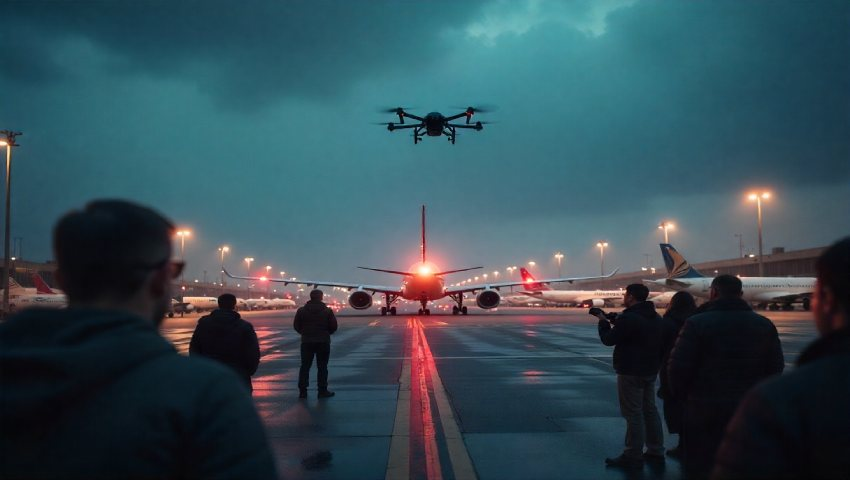
The epicenter of the day’s aviation turmoil was definitively established as Chicago O’Hare International Airport in Illinois. An overwhelming majority of the total disruption occurred at this single facility, where 34 cancellations were recorded alongside a staggering 868 flight delays. The scale of the impact at O’Hare was immense, representing over 65% of the total recorded delays across all six airports surveyed.
Beyond the Midwest, the major aviation hubs serving the East Coast and the West Coast were also noticeably affected. Newark Liberty International Airport, which serves the New Jersey and New York metropolitan area, was subjected to 5 cancellations and 79 delays. A short distance away, John F. Kennedy International Airport, another critical gateway for New York, saw 3 flights cancelled and 104 delayed. Cumulatively, the disruptions in the New York-New Jersey region constituted a significant block of the total affected flights, particularly concerning delays.
Operational irregularities were also recorded in the Mountain West and coastal regions. Denver International Airport in Colorado reported 6 cancellations and 95 delays. On the West Coast, Los Angeles International Airport in California was impacted by 2 cancellations and 91 delays. Finally, in the Southeast, Miami International Airport in Florida logged 2 cancellations and 81 delays. The geographical spread of these affected facilities underscores that the operational instability was a US national issue, with major passenger and cargo gateways across the country being compromised.
Impacted Airlines
The disruptions were not evenly distributed among air carriers, with a number of airlines bearing the brunt of the operational difficulties. SkyWest was identified as the most heavily affected airline overall, contributing significantly to the totals, primarily at Chicago O’Hare International Airport in Illinois. The carrier was responsible for 16 cancellations and 173 delays at O’Hare, supplemented by a further 2 cancellations and 4 delays at Los Angeles International Airport in California. This single airline accounted for 18 of the total 52 cancellations recorded.
Envoy Air also experienced considerable difficulty at O’Hare, recording 9 cancellations and 160 delays, placing it as the second-highest contributor to the day’s cancellations. United Airlines, a key operator at multiple affected locations, experienced a significant number of disruptions across its network, including 2 cancellations and 167 delays at Chicago O’Hare and 3 cancellations and 38 delays at Newark Liberty International Airport in New Jersey.
Other carriers were also impacted by the widespread operational stress. PSA Airlines reported 5 cancellations and 8 delays at Chicago O’Hare, while Republic Airways added 1 cancellation and 74 delays to the O’Hare total. In Colorado, Frontier was hit with 2 cancellations and 4 delays, while Southwest Airlines was responsible for 2 cancellations and 35 delays at Denver International.
On the East Coast, Scandinavian Airlines (SAS) logged 2 cancellations at Newark Liberty Intl, while Austrian Airlines was responsible for 2 cancellations at John F. Kennedy International Airport in New York. American Airlines also saw disruptions, including 1 cancellation and 4 delays at JFK and 2 cancellations and 38 delays at Miami International in Florida.
Beyond these specific figures, delays were being experienced by several other Airlines.
Probable Impact on Local Tourism
The substantial volume of flight cancellations and delays across major US gateways might create a cascade of logistical challenges, particularly for the local tourism and service industries in the affected cities. Disrupted flight plans invariably translate into unanticipated requirements for passenger accommodation, ground transportation and food services in locations such as Chicago, Denver, Newark, New York City, Los Angeles and Miami. The most pronounced effect is anticipated in the Chicago area of Illinois, given the sheer volume of 868 delayed flights.
Travelers intending to fly to tourism-dependent regions, such as Florida or California, have had their inbound journeys compromised, affecting immediate hotel and attraction bookings. Conversely, stranded passengers whose outbound flights were cancelled or heavily delayed are required to secure last-minute overnight lodging and dining, adding unexpected expenditure within the local economy of the US metropolitan areas. The combined scale of cancellations and delays across Illinois, Colorado, New Jersey, New York, California and Florida represents a sudden and considerable logistical strain, the full economic implications of which will be assessed over the coming days.
What Affected Passengers Can Do Now
Passengers whose travel plans have been compromised by the cancellations and delays are strongly advised to establish immediate communication with their operating airline. Rebooking procedures are required to be initiated directly through the carriers’ official customer service channels. Given the significant number of affected flights, patience is required and priority should be placed on confirming a revised itinerary.
Documentation relating to the original flight booking, as well as any official notifications of the cancellation or delay, must be retained. This information will be crucial should compensation be sought under the terms of the airline’s contract of carriage or for submission of claims to travel insurance providers. For shorter domestic sectors within the US, such as travel between New Jersey and other nearby hubs, alternative modes of transport, including rail services, should be actively explored as a contingency measure against further aviation-related delays.
-The information provided is sourced from FlightAware.
The information in this article is based on available flight-tracking data and publicly reported updates. Actual flight statuses may change as airlines adjust schedules throughout the day. Travelers should always verify real-time information directly through their airline or airport before making any travel decisions.
#TravelNews #FlightDelays #USAirports #AirlineUpdates #TravelChaos #Carrerbook #Anslation #FlightCancellation #USATravel #AviationNews #BreakingNews #TravelAlert #AirportUpdates #TravelPanic #AirTravelIssues #TravelTips #SkyTravel