

A healthy daily routine doesn’t need to be perfect. It should be simple, Lifestyle flexible and realistic. By starting with small healthy habits, you can build a daily routine that supports energy, focus and mental health.
Consistent routines can help you feel better and stick with your goals by helping you establish healthy behaviors. Taking care of yourself by eating healthy, moving regularly, managing stress and getting quality sleep can lower the risk of conditions like Type 2 diabetes, heart disease, depression and anxiety.
Learn what a healthy day can look like, including a morning routine and bedtime routine, and how to make a plan that lasts.
What Is a Healthy Daily Routine?

A healthy daily routine is made up of habits you do most days, such as keeping a steady sleep schedule, eating regular meals, exercising and managing stress. These habits should fit your life and be doable so you continue to come back to them.
Regular physical activity and quality sleep are two essential parts of a healthy daily routine.
Getting enough exercise
The American Heart Association (AHA) recommends aiming for one of the following each week:
- 150 minutes of moderate exercise (like brisk walking)
- 75 minutes of vigorous exercise (like running)
- A mix of both
Spreading your activity across the week — rather than doing it all in one day — helps your heart get the most benefit.
Getting enough sleep

From newborns to adults age 65 and older, sleep needs vary throughout life. Most adults age 18 to 64 should aim for seven to nine hours of sleep each night.
Getting enough high‑quality sleep supports:
- Mental health
- Immune function
- Memory
- Focus
- Mood
Consistent sleep also helps regulate appetite, stress and energy levels. Good sleep is one of the strongest foundations for a healthier routine and can make it easier to maintain other daily habits.
“My rule of thumb for anyone wondering if they’re getting enough sleep is to ask: ‘Do you feel rested upon waking?’ If so, that is a better indicator than focusing on the number of hours of sleep you’re getting,” says Mary Ella Blair Wood, DO, an integrative medicine physician at Northwestern Medicine
What’s a Healthy Bedtime Routine?
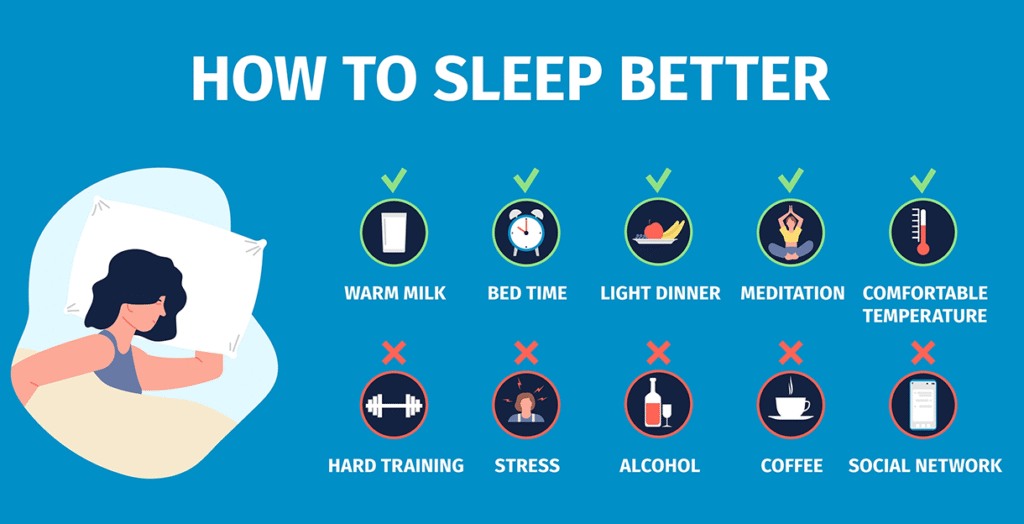
Your evening routine can include a few simple habits as well. Ideas include:
- Establish a consistent sleep schedule and stick to it, even on weekends.
- Start winding down at least one hour before bed. Dim lights and limit screens.
- Try light stretching, reading or listening to calming music.
- Keep your room cool, dark and quiet.
- If thoughts are racing, write them down in a notebook.
“Keeping a consistent bedtime and wake-up time is essential for circadian rhythm and cortisol alignment,” says Dr. Wood. “Many people go to bed late and sleep in on the weekends, but if you really want to improve your sleep, then sticking with the same time (within a half hour) every day for bedtime and the time you wake up is crucial.”
Eat Balanced Meals Throughout the Day
A proper diet includes carbohydrates for energy, protein for muscle repair, fats for brain function, and vitamins/minerals for overall health. Poor eating habits can lead to obesity, weakness, and chronic diseases.
Try this: Fill half your plate with vegetables, include protein in every meal, and reduce fried or junk food.
Reduce Screen Time and Take Breaks

Excessive use of phones and computers can cause eye strain, headaches, poor posture, and disturbed sleep. It also increases stress and reduces attention span.
Try this: Follow the 20-20-20 rule, take breaks every hour, and avoid screens before sleep.
Manage Stress with Healthy Practices
Chronic stress can lead to anxiety, depression, high blood pressure, and weak immunity. Simple practices like meditation, breathing exercises, and relaxation can help control stress levels effectively.
Try this: Practice meditation for 5–10 minutes, do deep breathing, and spend time in nature.
How can I create good habits?

Making new habits can be a challenge. It’s especially hard to change everything all at once. It’s easier to set small, realistic, achievable goals. This helps create a sense of confidence and encourage further habit goals that you can build upon. For example, if you want to form good exercise habits, start by taking short walks, most days of the week. Once you have formed your habit, you can work up to more intense activity, or walking more frequently.
It might take you several months to create a new habit. To form a habit, repetition is key. You must include the activity in your regular routine. It can help if the habit is something you truly want, and something that aligns with your values.
It is important to make time for the habit you want to form. You can try to keep track of your goals by:
- keeping a diary, in a notebook or digitally
- using a wall planner
- being accountable to a friend or family member
Many habits are triggered by events. For example, washing your hands is triggered by going to the toilet. When forming a habit, try to set triggers for it as part of your existing routine. These could include:
- a particular time of day
- a place, such as parkrun, swimming or the gym
- an event such as waking up or eating lunch
It may help to set triggers that are also associated with something you enjoy. This can help you to form your habit.
You can also set reminders to help you maintain good habits. If you use an online diary, set automatic reminders on your phone or computer. There are also apps available that help with goal setting and new habits.
Let your family and friends know about your goals and the habit you want to form. They can provide support and encouragement, which can help to keep you motz
How To Start a Healthy Daily Routine
Make it easy and start with one or two small changes and build from there. Small wins build momentum and confidence.
For example, to improve your sleep, set a sleep schedule to get quality sleep and maintain that schedule. After it becomes a habit, you can incorporate another healthy habit, including one of these ideas:
- Moving more: Get physical activity like walking for at least 30 minutes most days (or three 10‑minute walking sessions) to meet the AHA recommendations.
- Eating healthier: Eat at least one fruit or vegetable at every meal.
- Managing stress: Try a breathing exercise once a day.
Keeping a simple list in a notebook can make it easier to monitor your healthy habits each day.
“We can’t always remove stressors from our life, but we can start small habits to incorporate more of the relaxation response throughout the day,” says Dr. Wood.
Healthy Habits Lead to More Healthy Choices

Healthy habits build momentum. When one part of your routine feels strong, it can become easier to make other healthy choices throughout the day.
- Small, consistent habits help create a sense of structure. This structure can make daily decisions feel less overwhelming and reduce the need to figure out what to do next. Over time, this can increase confidence and help healthy choices feel automatic.
- Healthy habits can shape mindset. When you make choices that support your well‑being — even simple ones — it reinforces the idea that your health is worth prioritizing. This can lead to more self‑compassion, a greater sense of control and motivation to continue choosing what helps you feel your best.
- Healthy habits create positive patterns. These patterns can help steady your mood, reduce stress, support a predictable rhythm and make it easier to return to healthy routines after busy periods.
Every healthy choice, no matter how small, contributes to this sense of momentum. Over time, these small choices stack together and help build a lifestyle that feels more intentional and sustainable.
How Do You Know if Your Routine Is Working?

Here are signs that your routine is helping:
- Steadier energy
- Better mood
- Easier to focus
- Improved sleep
- Better able to cope with stress
Signs you need to adjust your routine:
- You don’t look forward to it.
- You frequently skip parts of your routine.
- Your stress is increasing.
Do a quick weekly check‑in:
- What helped?
- What felt challenging?
- What small tweak could make next week easier?
Celebrate small wins and adjust your routine as life changes. When things get busy, scale your habits down. When you have more space, build them back up. There’s no single most important part of a healthy routine. Begin with the changes that feel doable right now and grow from there.
FAQs
1. What are some easy everyday habits for a healthier lifestyle?
Simple habits like drinking enough water, eating balanced meals, staying active, getting enough sleep, and taking regular breaks can support a healthier lifestyle.
2. How can I start building healthier daily habits?
Start with one or two small changes instead of changing everything at once. Once they become part of your routine, you can gradually add more healthy habits.
3. Why is regular physical activity important?
Regular movement can support overall fitness, energy levels, strength, and general well-being. Even walking or stretching can be a simple way to stay active.
4. How much sleep should I get every night?
Most adults need around 7–9 hours of sleep each night. A consistent sleep schedule can also help support better rest.
5. How can I eat healthier without following a complicated diet?
Focus on balanced meals with vegetables, fruits, whole grains, protein sources, and healthy fats. Try to limit highly processed foods and added sugars.
Simple Fashion Tips and Trends for Everyday Style
Let’s be completely real for a second. If you look at most lifestyle blogs or…
Trending Entertainment Ideas for Your Free Time
Seriously, why does our “free time” sometimes feel like a second job? Think about how…

Easy Beauty Tips to Refresh Your Everyday Look in 2026
Look, let’s drop all the formal article formatting for Beauty a second and just talk…

Trending News and Important Updates Making Headlines in 2026
Look, I totally get what you are trying to do. You want writing that sounds…

What’s Trending in 2026: Latest News and Updates
Remember when keeping up with “latest tech trends” meant Trending reading about abstract concepts that…

Useful Technology Trends Making Everyday Life Easier
Let’s be honest for a second: a few years ago, buying “smart” technology often felt…